Reviving a Tired Yard Without a Full Redesign
Bought a home with a tired yard? Learn how to revive your lawn, replace dead shrubs, and clean up beds without paying for a full landscape redesign.
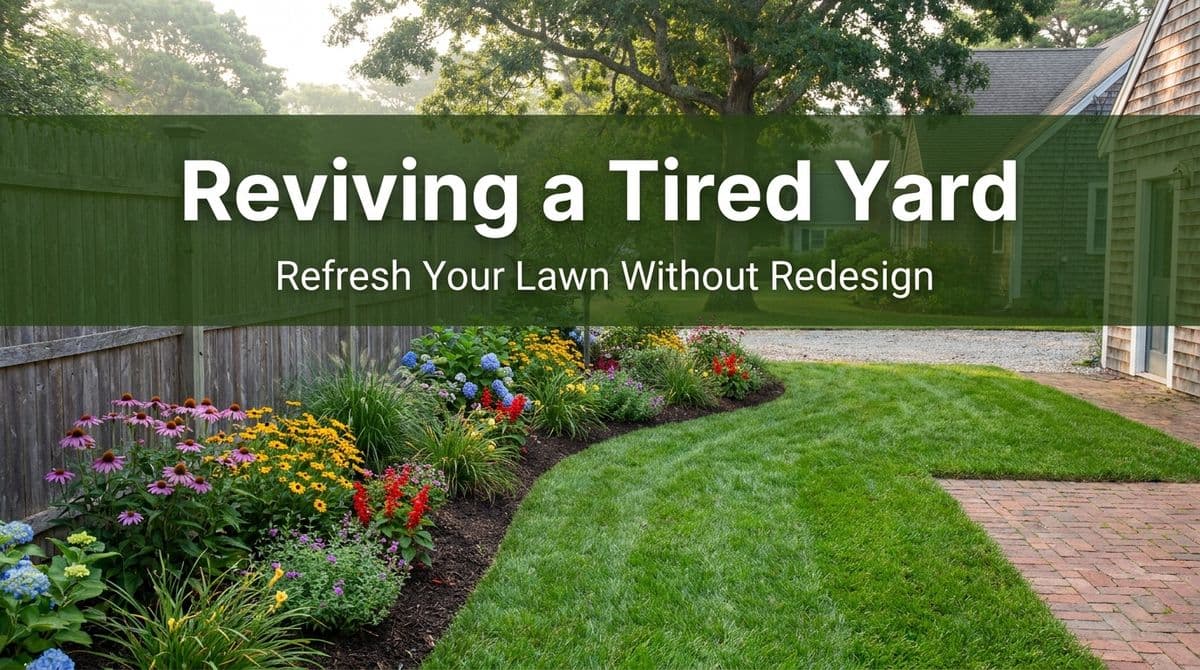
From “Almost There” to Fresh and Inviting
We recently got a call from a homeowner — let's call him Omar — who had bought a house about a year ago. The yard was mostly in good shape: a small lawn, some shrubs, a few ornamental trees. But after going through a season, he could see the cracks starting to show.
Some of the small shrubs had died back, a few spots in the lawn were thin or bare, and there were areas he’d already tried to clean up himself but couldn’t quite finish, especially in hard-to-reach corners. Omar told us, “We don’t need a full-blown yard installation. We just want to refresh what’s here and fix what’s dying.”
That kind of project is exactly what we love: taking a tired yard that has good bones and bringing it back to life without a complete redesign. If you’re in the same spot as Omar, here’s how we typically walk through a yard refresh during a consultation — and what you can start thinking about right now.
Step 1: Walk the Yard and Diagnose the Problems
On every visit, we start the same way: a slow walkthrough of the property with the homeowner. With Omar, we spent 30–60 minutes looking at each area and listening to what was bothering him, because he wasn’t even sure what terms to use — he just knew “something isn’t right.”
When we walk a yard, we look for a few key things:
- Lawn health: bare patches, thin or yellowing grass, compacted areas, and drainage issues.
- Shrub and small tree health: dead branches, no new buds, signs of disease or insect damage.
- Overgrown or hard-to-reach areas: corners behind sheds, fence lines, and beds choked with weeds or leaf buildup.
Before you call anyone out, you can do your own mini-inspection. Walk your yard and make a simple list: “dead shrub by front walk,” “bare patch near mailbox,” “messy corner by fence.” Having that list ready helps us (or any landscaper) give much clearer guidance.
Step 2: Refreshing the Lawn Without Starting Over
Omar’s lawn didn’t need to be torn out — it just needed targeted help. That’s often the case. Completely re-sodding or re-seeding a yard is expensive and not always necessary.
For a typical lawn refresh, we usually recommend:
- Core aeration in compacted areas so water and nutrients can reach the roots.
- Overseeding thin spots with a grass blend matched to your sun/shade and region.
- Topdressing with a thin layer of compost or soil in the weakest areas.
- Targeted fertilization instead of overdoing it across the whole yard.
For homeowners, the big takeaway is: don’t assume a few bare spots mean you need a “full-blown lawn installation.” Often, a combination of overseeding, aeration, and proper watering can bring things back within one or two growing seasons.
Watering Tips After Overseeding
Once new seed is down, the way you water makes or breaks the results. After we overseed, we usually recommend:
- Keeping the top 1 inch of soil consistently moist (not soggy) for the first 2–3 weeks.
- Watering lightly 1–2 times a day at first, then tapering to deeper, less frequent watering as the grass sprouts.
- Avoiding heavy foot traffic on newly seeded areas until the grass has been mowed at least 2–3 times.
These simple steps help protect the investment you’ve just made in fresh seed and soil.
Step 3: Replacing Dead Shrubs and Small Trees
Omar had several small shrubs that just weren’t coming back. He wasn’t sure if they were “trees or shrubs” — he just knew they were brown and bare. That’s common, and it’s why an in-person look is so helpful.
Here’s how we generally approach dead or struggling plants:
- Check for life: We scratch a small section of bark. Green underneath means there’s still life; dry and brittle usually means it’s done.
- Look for pattern problems: Are all the plants on one side of the yard struggling? That can point to poor drainage, winter damage, or soil issues.
- Replace smart, not bigger: We match size and style to what’s already there so the yard feels cohesive, not like a patchwork.
When we do replacements, we stick to small trees and shrubs that fit well in residential spaces — things like ornamental trees, hedging shrubs, or privacy plantings. Large, mature trees usually call for an arborist instead.
Seasonal Timing for Plant Replacement
Timing matters. In our climate, the best windows for planting or replacing shrubs are typically early to mid-spring and early fall. Temperatures are milder, and plants have a chance to establish roots before the stress of summer heat or deep winter cold.
If you’re planning a refresh, try to schedule shrub and small tree work during these windows. Lawn overseeding also tends to do best in spring or fall, when moisture is more consistent and weeds are less aggressive.
Step 4: Cleaning Up Beds and Hard-to-Reach Areas
Even though Omar had already done “lots of cleaning,” he pointed out some tight corners and dense beds that he just couldn’t get to with his tools. This is where a professional crew can make a big difference in a short time.
A focused cleanup day often includes:
- Clearing leaves, branches, and old plant material from beds and fence lines.
- Cutting back dead growth from perennials and shrubs.
- Edging beds to create clean lines along lawn and walkways.
- Hauling away debris so you’re not stuck with a pile at the curb.
These tasks don’t change your design, but they dramatically change how tidy and intentional your yard feels.
Budgeting and What to Expect From a Professional Visit
During our call, we were upfront with Omar that we have a daily minimum for on-site work. That’s because once we roll a crew, equipment, and materials to a property, there’s a base cost to operate, even if the work seems “small.” For us, that minimum often sits around a full day’s worth of labor.
Here’s what most homeowners can expect from a reputable landscaper for a yard refresh:
- Free estimate and consultation: A walkthrough of the property, typically 30–60 minutes, to assess needs and answer questions.
- Clear scope of work: A written breakdown of tasks — lawn repair, shrub replacement, cleanup, materials — and an estimated total.
- Realistic pricing: A minimum charge for small jobs, with the best value coming when several refresh tasks are bundled into one visit.
Our advice: if a company has a daily minimum, try to make the most of that day. Combine everything you’ve been meaning to tackle — lawn fixes, shrub replacements, and cleanup — into one scheduled visit. That’s exactly how we helped Omar plan his project.
Bringing a Tired Yard Back to Life
You don’t have to start from scratch to have a yard you’re proud of. A thoughtful refresh focuses on:
- Diagnosing what’s really wrong (and what’s worth saving)
- Repairing the lawn instead of replacing it when possible
- Swapping out only the dead or failing plants
- Giving beds and corners a thorough, professional cleanup
That’s how we approach every consultation: respect what’s already there, fix what’s failing, and leave you with a yard that looks cared for and welcoming — without a full redesign. If your yard feels “almost there” like Omar’s, a targeted refresh might be all you need.